
PI-RADS v2.1 Structured Reporting Tool
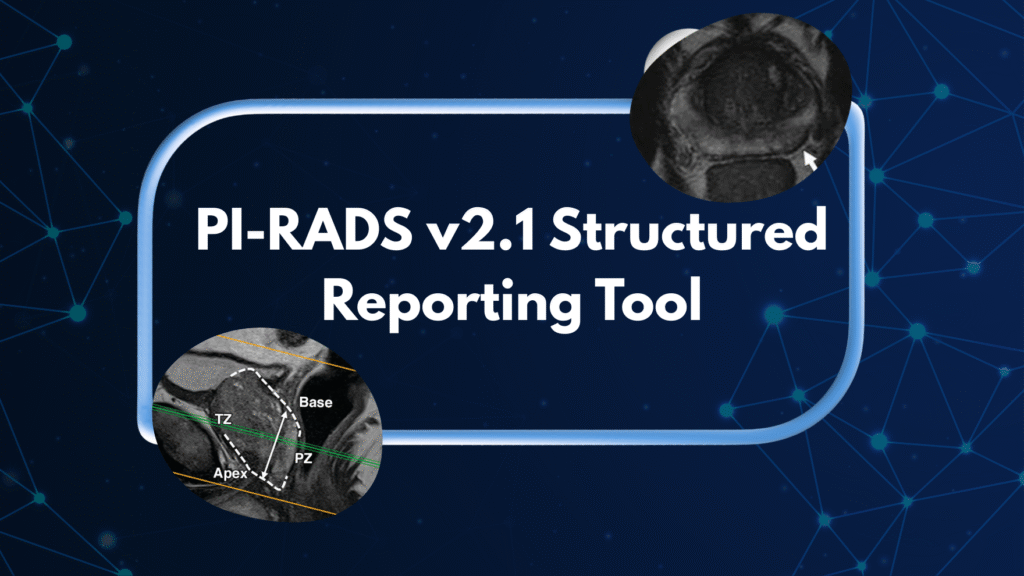
A streamlined tool for accurate, standardized PI-RADS v2.1 prostate MRI reporting.
LI-RADS Structured Reporting Tool
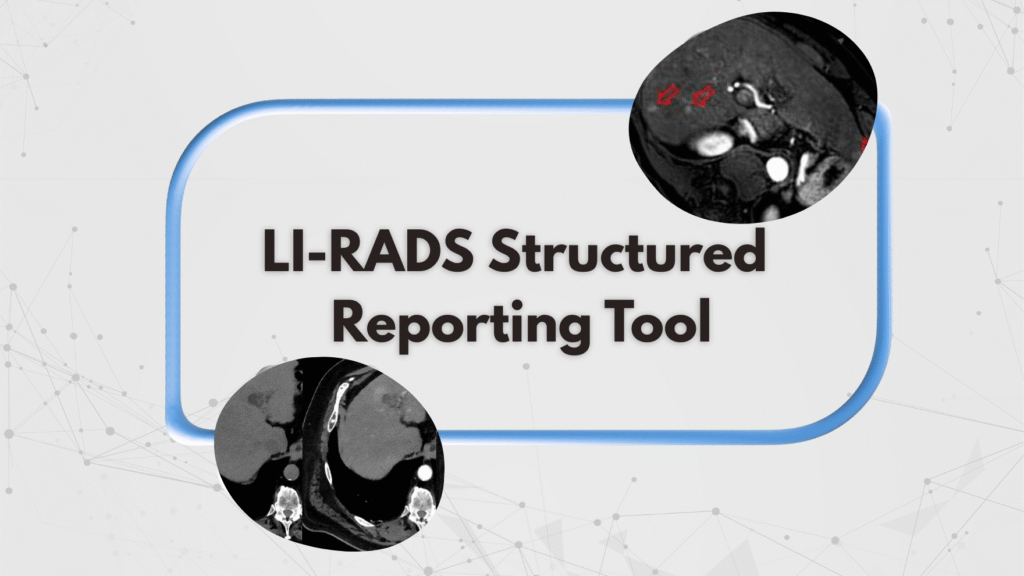
This tool features an AI Edge assistant that provides real-time clinical significance based on LI-RADS guidelines.
MRI ENZIAN ENDOMETRIOSIS REPORTER

A structured reporting tool for MRI-based ENZIAN classification of endometriosis.
Acute-on-Chronic Pancreatitis Reporter

A structured reporting tool designed to streamline MRI/MRCP interpretation for acute-on-chronic pancreatitis.
Shorter Radiation Course Safe for Breast Reconstruction

A recent study presented at the annual meeting of the American Society for Radiation Oncology (ASTRO) in Washington, DC, revealed promising results for breast cancer patients. The study concluded that a shorter course of postmastectomy radiation combined with breast reconstruction is both safe and effective. Study Overview and Key Findings Matthew Poppe, MD, from the…
AI and Hormone Receptor Status in Breast Cancer
Introduction Breast cancer is a complex disease, and understanding its characteristics is crucial for effective treatment. One important factor that doctors look at is the hormone receptor status of the cancer. This refers to whether or not the cancer cells have receptors for certain hormones, like estrogen and progesterone, which can fuel the growth of…
Predicting Breast Cancer Metastasis with AI
Introduction Breast cancer is a significant health issue for women around the world. While many people survive breast cancer thanks to early detection and treatment, the disease can become more dangerous if it spreads to other parts of the body. This spread, known as metastasis, makes the cancer harder to treat. But what if we…
AI and Digital Mammography: Reducing Radiation Exposure
Introduction Digital mammography has greatly improved breast cancer detection, offering clearer images and faster results than older methods. However, there are still concerns about radiation exposure from the X-rays used in mammograms. Artificial Intelligence (AI) can make digital mammography even better by improving accuracy and significantly reducing radiation doses. This blog explains how AI is…
Telemedicine and AI in Breast Cancer Care

Introduction The integration of artificial intelligence (AI) in telemedicine is revolutionizing breast cancer care by offering remote consultations, second opinions, and continuous monitoring. This technology enhances patient outcomes by providing timely and accurate information, reducing the need for frequent hospital visits, and improving the overall efficiency of cancer care. The Role of Telemedicine in Breast…
AI in Liquid Biopsies: Transforming Cancer Detection
Introduction Liquid biopsies represent a revolutionary approach to cancer detection and monitoring, offering a less invasive alternative to traditional tissue biopsies. By analyzing biomarkers in bodily fluids such as blood, liquid biopsies can detect cancer-related genetic mutations, circulating tumor cells (CTCs), and cell-free DNA (cfDNA). Integrating artificial intelligence (AI) with liquid biopsy technology enhances its…